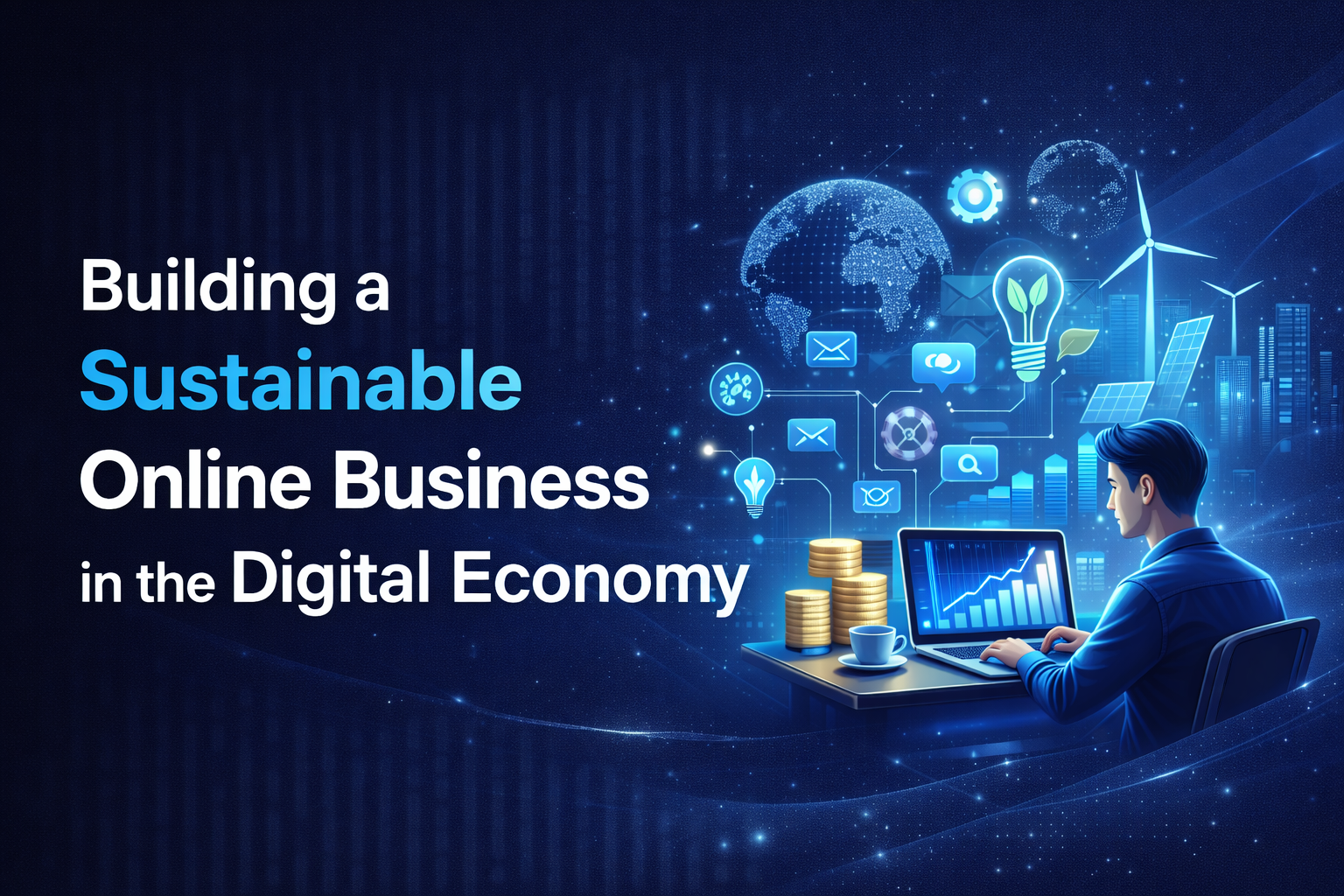
Building a Sustainable Online Business in the Digital Economy
The digital economy has transformed the way businesses operate. Today, individuals can create global companies from their laptops, reaching customers across continents without ever opening a physical storefront.
However, while starting an online business has become easier, building a sustainable one still requires strategy, discipline, and long-term thinking.
The Evolution of Online Business
In the early days of the internet, online business opportunities were limited primarily to ecommerce and affiliate marketing. Over time, new technologies expanded the possibilities.
Modern digital businesses now include:
- subscription platforms
- educational products and online courses
- creator-driven brands
- digital service agencies
- software platforms
The barrier to entry has decreased dramatically, enabling individuals from diverse backgrounds to participate in the digital economy.
Key Foundations of a Sustainable Online Business
Sustainability in online business comes from several core elements.
Clear Value Proposition
A successful business must clearly communicate the value it provides to customers. This value may come in the form of:
- solving a specific problem
- saving customers time
- improving productivity
- providing knowledge or entertainment
Businesses that clearly articulate their value stand out in competitive markets.
Audience Building
Long-term success often depends on building a loyal audience. Entrepreneurs can develop audiences through:
- content marketing
- social media engagement
- newsletters and email lists
- educational resources
An engaged audience provides a stable foundation for product launches and future growth.
Consistent Branding
Branding helps businesses communicate their identity and values. Consistent branding includes:
- visual design
- messaging tone
- customer experience
- reliability of products
Strong brands inspire trust and encourage repeat customers.
Continuous Improvement
Markets evolve quickly in the digital world. Entrepreneurs must continuously improve their products and adapt to changing customer needs.
Feedback from customers, analytics data, and market research all play important roles in this process.
Diversifying Revenue Streams
Many successful online businesses generate income from multiple sources. Diversification reduces risk and creates more stability.
Possible revenue streams include:
- digital product sales
- consulting or coaching
- membership communities
- affiliate partnerships
- advertising revenue
By developing several complementary income streams, entrepreneurs can build resilient businesses.
The Role of Technology
Technology continues to expand what entrepreneurs can accomplish. Automation tools allow small businesses to operate with remarkable efficiency.
Examples include:
- automated email marketing systems
- customer relationship management platforms
- analytics dashboards
- ecommerce platforms
These technologies allow entrepreneurs to focus more on strategy and creativity rather than repetitive tasks.
Conclusion
The digital economy offers extraordinary opportunities, but sustainable success requires careful planning and consistent effort. Entrepreneurs who focus on value creation, audience development, and continuous improvement can build businesses that thrive for many years.